

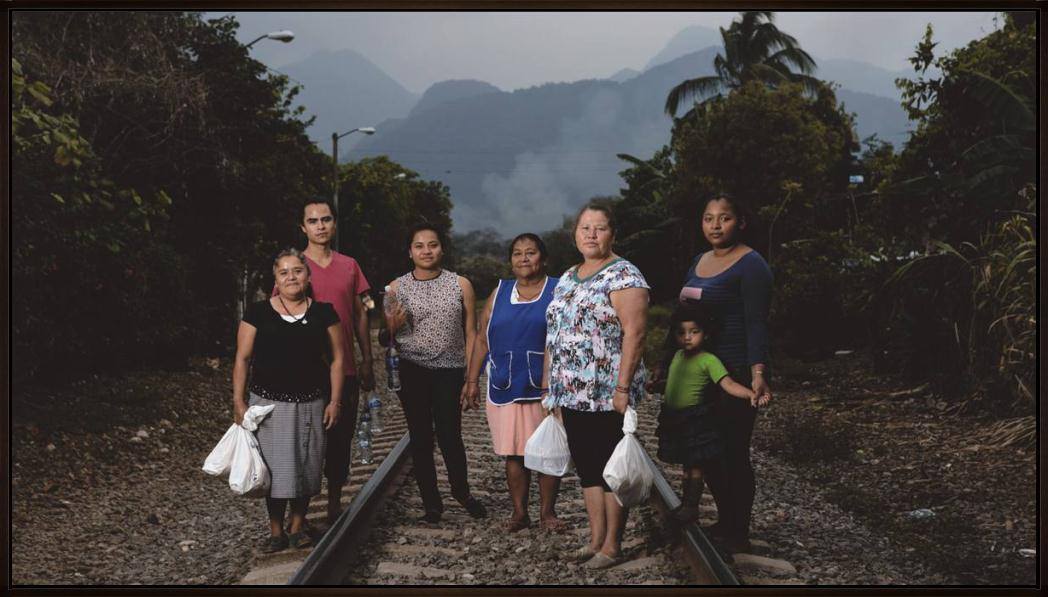
NEW PROJECT BY GIACOMO BRUNO: LAS PATRONAS
“Three months on the road. An extraordinary concentrate of unique experiences and unforgettable encounters.
One last experience to conclude my chapter in Mexico.
A final grueling journey from Guadalajara to Cordoba, Veracruz, to reach the final destination in the middle of the Mexican sierra, Amatlan de los Reyes.
The gruesome tales, stories and warnings took away my sleep and appetite for two days. Until the last I considered giving up, turning back and not risking so much. A mixture of feelings and fears pervaded my body without allowing a glimmer of serenity to face the journey. In short, fear.
Waiting for me, however, here in Amatlan de los Reyes,I found the warmth and welcome of these incredible women who are known in Central and South America as Las Patronas.
it is right here, in this pueblito lost in the wilderness, that every day makes transit the Beast, the freight train that crosses the country from South to North. The train of death, as it is called by the migrants who daily defy fate by traveling on it without the slightest security, in the most diverse weather conditions, facing hunger, thirst, assaults by pandillas (criminal gangs), migratory police, and above all, fatigue and sleep.
The dream, the hope and the desire for a better future in the U.S. are so great that it drives these migrants to defy beyond reason fate. To leave their country, their home, their loved ones to embark on a journey that is more likely to end in repatriation, severe mutilation, or as is more often the case, death, than arrival at the destination.
On the beast, migrants travel for days at a time, and the terror of losing their seats makes them try the impossible to stay on the wagons and never get off, except when forced to due to migration controls or gang assaults, for whom they are easy prey from which to steal all the savings gleaned for the crossing.
the only relief for these desperately fleeing human beings is to meet along the way people of heart and humanity like Las Patronas.
Every day of the year, from 1995 to the present, here in Amatlan de los Reyes, this volunteer group of 12 women prepares bottles of fresh water, cooks rice, beans and tortillas for hundreds of desperate faces and souls who an average of 4 times a day lean out of the beast’s wagons on the tracks leading north.
The fate of each of these people is uncertain, none of those faces will be recognized tomorrow and there is no telling what will become of them. But a freshly cooked meal is as precious a gift as one can give to alleviate some suffering and give these men and women one more chance to arrive safely at their longed-for destination.
A “gracias madre” and a “Dios las bendiga” are the reward and the driving force behind all this from the first day when for the first time Norma and Bernarda Romero gave up their bread and milk to a hungry migrant crossing the village on the tracks. From that day forward standing by listening to hear the arrival of the train is a daily fixture, as is the disposing of themselves on the side of the road and throwing food and water to the migrants on the run.
I am here today with these examples of humanity and I feel tiny little. They give me food and sleep, they worry if I have had enough to eat, and they want to know how Italians behave in the face of migration in the Mediterranean. They worry about the sensitivity of institutions and people in my country that is thousands of miles away. They ask questions all the time, they want to know everything about how people are helping these fleeing souls. I don’t have much good news to give them, although fortunately Reggio Emilia, my city, has the golden reputation of being one step ahead of all others on the issue of reception. These days I sleep with young people fleeing misery and guerrilla warfare in Honduras, Nicaragua, San Salvador, Guatemala. I eat with them, wash dishes with them, share toilets with them, but most of all I look them in the eye. The word migrant has no meaning; it’s annoying. I see people identical to me, most of the same age. But it is impossible to put myself in their shoes.
I try, these days I want to pretend to be them, with 3 minutes to call home waiting for one’s turn with the house phone, dialing a number memorized by dint of repeating it in my head,away from everyone,with nothing, but giving thanks for a roof, a mattress and two hot meals a day.
I will make the most of this experience with the promise to learn as much as I can.
Los sueños también viajan.
Dreams also travel. “
James Bruno
Click to discover the photographs of “Las Patronas” in the gallery